
ESEIA Contributes to R&I High-Level European Dialogue on Widening and Institutional Transformation in Brussels
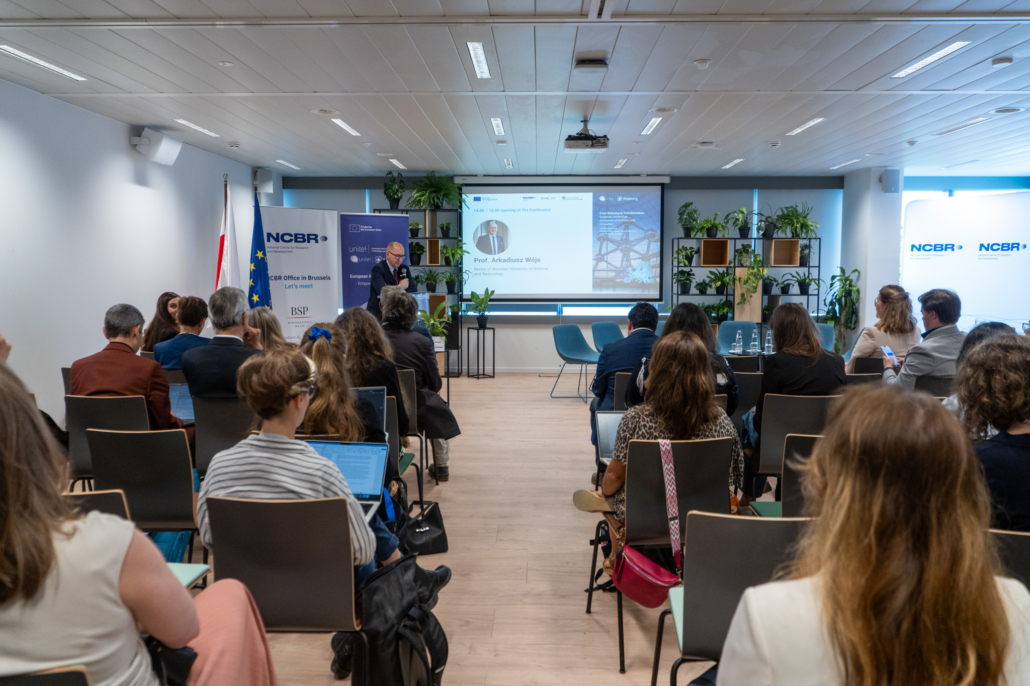
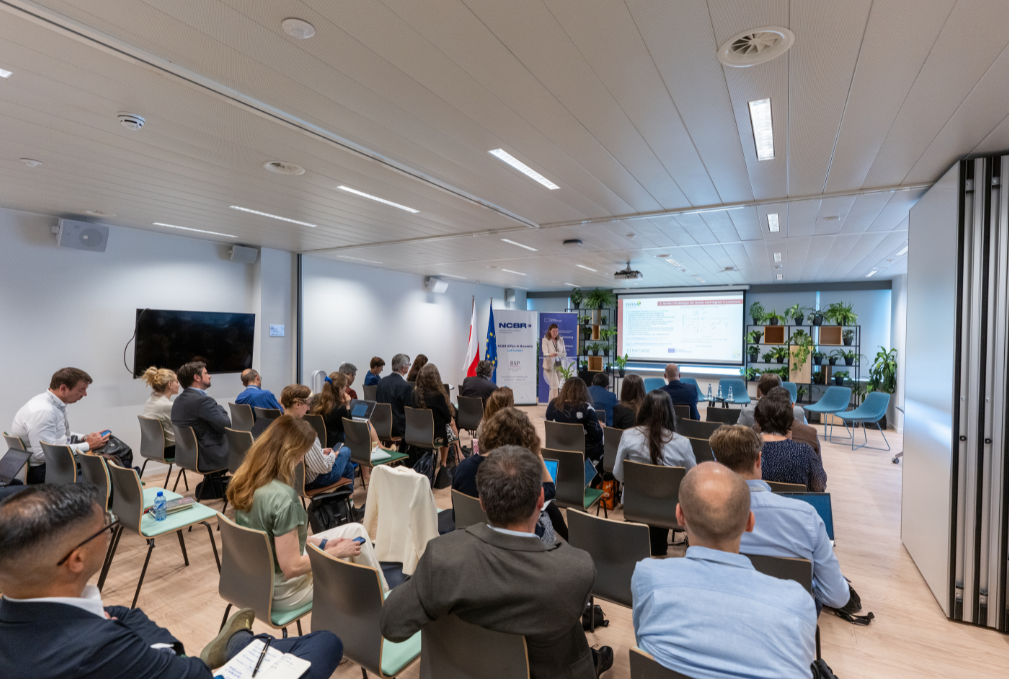
The European Sustainable Energy Innovation Alliance – ESEIA participated in the high-level conference “From Widening to Transformation: European Universities as Engines of Inclusion and Innovation”, held on 17–18 June 2026 at the NCBR Centre in Brussels. Organised within the Unite!Widening project, the event brought together European policymakers, university leaders, researchers, and innovation stakeholders to discuss how higher education institutions can strengthen the European Research Area (ERA) through collaboration, institutional transformation, and research excellence.
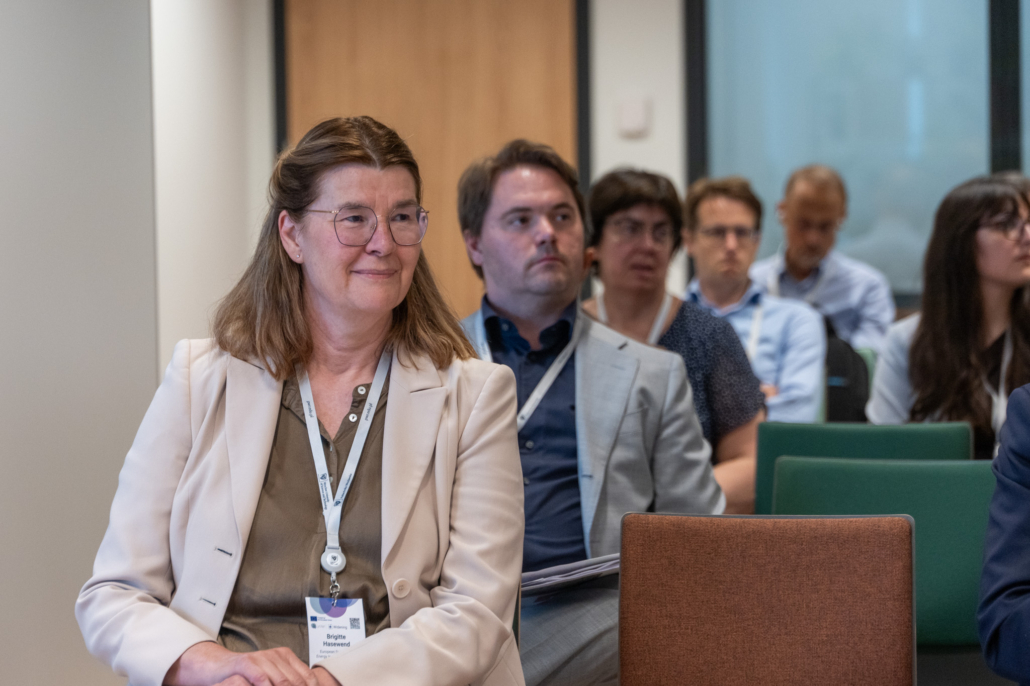
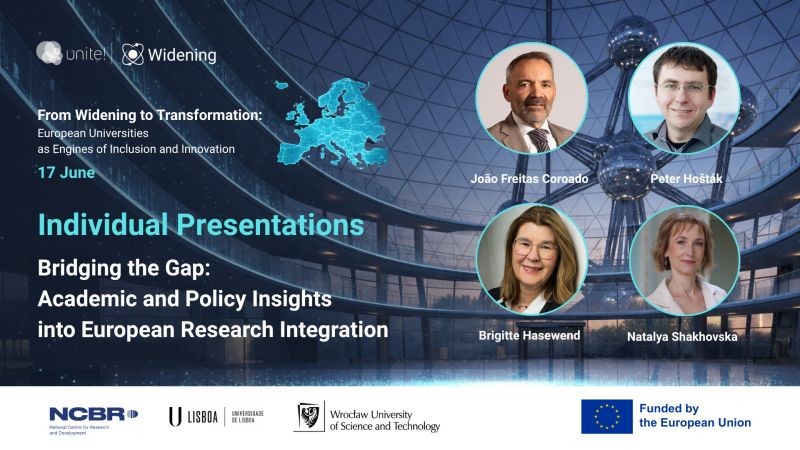
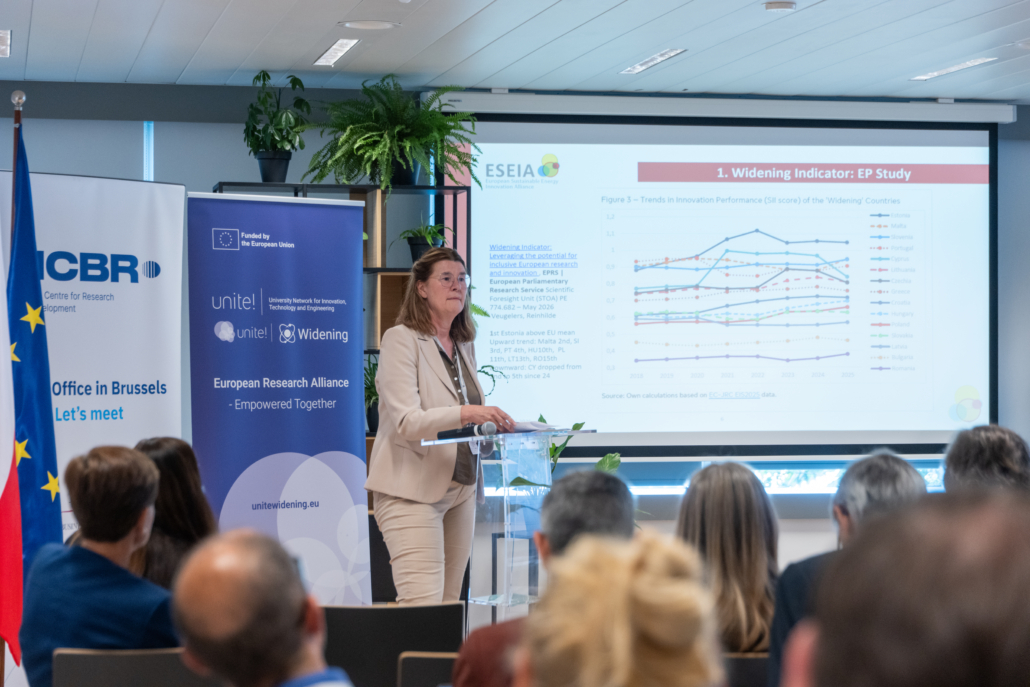
Representing ESEIA, Brigitte Hasewend, Director and Member of the Governing Council of ESEIA, delivered an invited presentation during the session “Bridging the Gap: Academic and Policy Insights into European Research Integration”, alongside Prof. João Freitas Coroado, President of the Polytechnic University of Tomar and President of the KreativEU Alliance, Prof. Nataliya Shakhovska, Rector of Lviv Polytechnic National University, and Monika Sandrejeva, Project Coordinator of the CLiCAM-ERA Talents project. The session explored experiences and perspectives on research, innovation and collaboration across widening and non-widening countries while discussing shared European objectives.
The conference featured contributions from senior representatives of the European Commission, including Joerg Niehoff, Deputy Head of Unit ERA, Spreading Excellence & Research Careers, DG R&I, Stefan Zotti, Deputy Head of Unit, DG Education & Culture, Krzysztof Kuik, Director, Clean Planet Directorate-General for Research and Innovation, highlighting the growing importance of collaboration between universities, research organisations, industry and policymakers in strengthening Europe’s competitiveness.
European thematic alliances as drivers of transformation
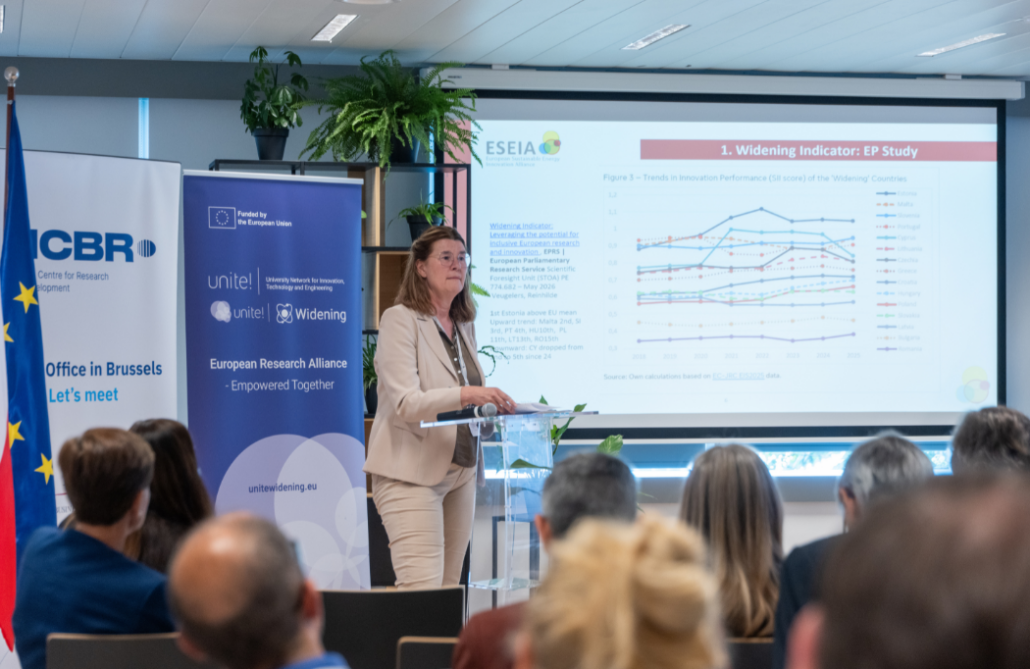
In her presentation, titled “The Role of European Alliances in Fostering Widening R&I for the Twin Transitions,” Brigitte Hasewend examined the challenges that continue to affect widening countries, including insufficient research funding, fragmented innovation ecosystems, limited research infrastructures, governance barriers, and talent retention. Drawing on findings from ESEIA’s work in the Horizon Europe INITIATE project and other research activities, she emphasised that these challenges require long-term structural cooperation rather than isolated project-based interventions.
“European Thematic Alliances have a special role to play to bridge the knowledge divide. ESEIA, as a long-standing organisation, through ESEIA Working Groups ensure a permanent inclusive structure for collaboration on R&I gaps. ESEIA is a trusted and pervasive initiative at short reach for all energy innovators.” – says Brigitte Hasewend, ESEIA Director.
The presentation highlighted several successful approaches for strengthening research and innovation capacity, including European University Alliances, research infrastructures, innovation hubs, entrepreneurial education and training, and collaborative Horizon Europe projects. These examples demonstrate how permanent cooperation structures can accelerate knowledge exchange, institutional reform, and innovation across Europe.
ESEIA’s contribution to the European Research Area
As a European thematic alliance dedicated to sustainable energy systems, ESEIA presented its experience in building long-term cooperation between academia, research organisations, industry and public authorities. The presentation showcased ESEIA’s network of member organisations and experts, its Working Groups, education and training programme, policy activities, and ongoing Horizon Europe projects supporting the green and digital transitions.
A central message of the presentation was that European thematic alliances provide trusted, permanent and inclusive collaboration structures that help bridge research and innovation gaps across Europe. Rather than creating temporary partnerships, alliances such as ESEIA enable continuous knowledge exchange, capacity building and interdisciplinary collaboration, supporting the long-term objectives of the European Research Area.
The presentation concluded with five key messages for future European research policy:
- creating supportive framework conditions for institutional transformation,
- building long-term partnerships,
- strengthening interdisciplinary and international collaboration,
- investing in human capital,
- recognising the strategic role of European thematic alliances in supporting widening and research excellence.
Through its participation in the conference, ESEIA reaffirmed its commitment to fostering inclusive research and innovation ecosystems and contributing to Europe’s transition towards a more competitive, sustainable and collaborative future.