
European R&I Days 2026
How much should Europe invest in research, how can researchers cooperate more effectively across borders, and how can funding deliver results faster? These questions shaped the European Research and Innovation Days 2026 and resonate with the recommendations in ESEIA’s FP10 Position Paper, which draws on its members’ experience to identify the conditions needed for collaborative research and sustainable energy innovation.
A central topic was the future of Horizon Europe for 2028–2034, the tenth EU Framework Programme for Research and Innovation, also known as FP10. The European Commission has proposed a €175 billion budget for the programme. The final budget and programme design remain under negotiation.
Ekaterina Zaharieva, European Commissioner for Startups, Research and Innovation, emphasised the importance of investment and access to finance. In her closing remarks, she identified three priorities for the next programme: an ambitious budget, a balance between flexibility and predictability, and faster delivery.
For research organisations, these priorities concern both the funding available and how it works in practice. Predictable funding helps institutions plan research and maintain partnerships. Flexibility allows them to respond to emerging challenges, while faster procedures can shorten the time between developing an idea and starting the work.
Enrico Letta addressed the fragmentation of Europe’s research and innovation systems. His call for a “fifth freedom”, covering research, innovation, knowledge and education, focused on enabling ideas, expertise and talent to circulate more freely across Europe.
This is particularly relevant to sustainable energy research, where developing and implementing a solution often requires expertise from several organisations. Universities, research institutes, businesses and public authorities need to combine their capabilities across disciplines and countries.
The wider programme addressed scientific freedom, research careers, artificial intelligence, public trust in science and international cooperation. These discussions explored the conditions needed for European research to thrive and contribute to society.
For the energy sector, a concrete highlight was the first EU Prize for Governance Innovations in Energy Communities. Ten citizen-led energy communities from six countries shared €1 million, recognising approaches to participation, decision-making, benefit-sharing and cooperation with local partners. The prize highlighted the role of governance and social innovation in supporting the energy transition.
ESEIA’s FP10 Position Paper, adopted by its General Assembly in March 2024 following consultation with its members, sets out five key recommendations:
- Enhance role of European Alliances
- Foster Global Eco-System Partnerships
- Prioritize horizontal topics
- Ensure actionability of the Framework Programme
- Provide room for self-organisation and entrepreneurship
These recommendations connect with the questions raised at the 2026 European R&I Days: how to strengthen cooperation, support research across disciplines and translate investment into results.
For ESEIA members, the next programme’s budget and funding rules will shape opportunities to build partnerships, plan collaborative research and bring sustainable energy solutions closer to practical use.
Further reading
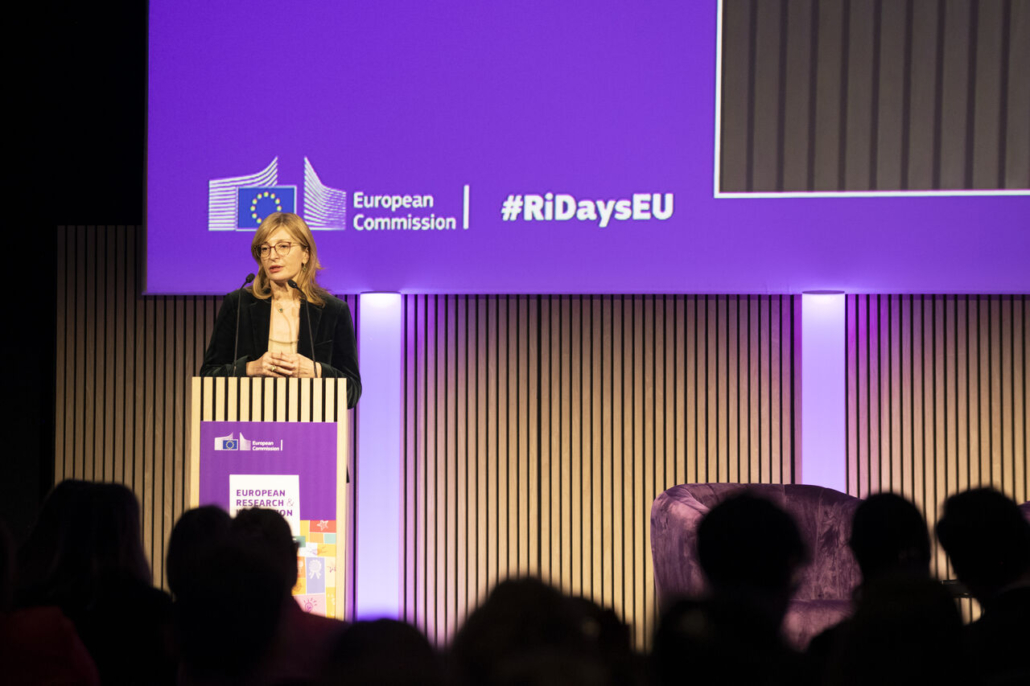
Photo: Ekaterina Zaharieva | EU Commissioner Startups, Research and Innovation at European Commission; Credit source: EU Science, Research and Innovation 2026

