
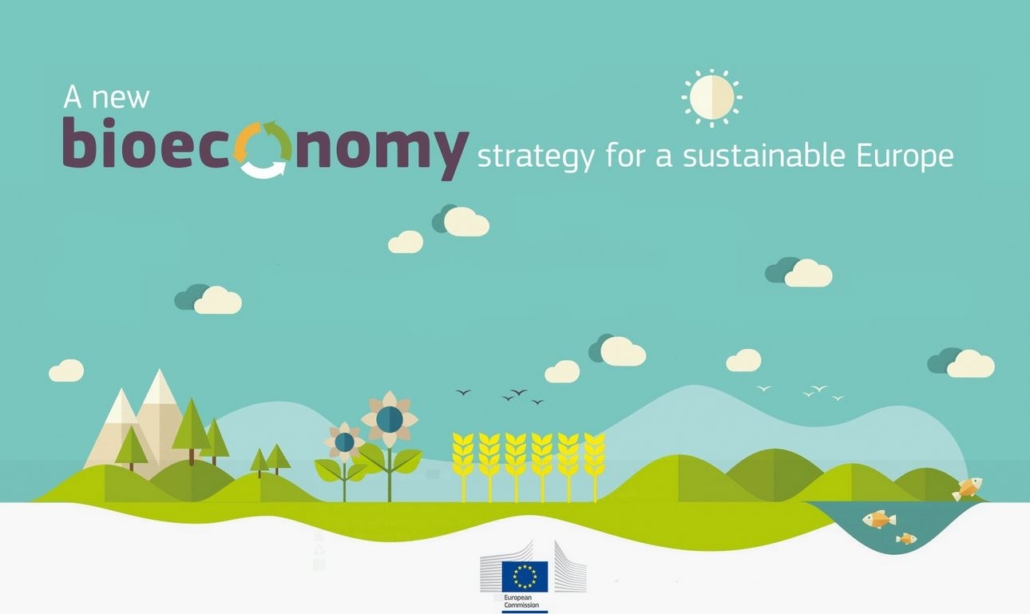
New Bioeconomy Strategy to drive green growth, competitiveness, and resilience across Europe
The European Commission has adopted a new Strategic Framework for a Competitive and Sustainable EU Bioeconomy, setting a clear direction for strengthening Europe’s industrial base while advancing climate neutrality and resource security. By promoting the use of renewable biological resources from land and sea, the strategy supports the transition to a circular and decarbonised economy, reducing reliance on fossil fuels and critical raw materials. This policy direction is also closely aligned with ESEIA’s recently submitted MOSAIC proposal, which addresses skills development, collaboration, and innovation pathways in bio-based systems supporting Europe’s green transition.
With a value of up to €2.7 trillion and 17.1 million jobs, the EU bioeconomy already makes a major contribution to economic growth and employment. The new framework seeks to unlock its remaining potential by scaling up innovation and investment, accelerating the deployment of bio-based technologies, and developing lead markets for materials and products such as bio-based chemicals, plastics, construction materials, textiles, fertilisers, and advanced biorefineries.
A strong focus is placed on creating favourable framework conditions, including a more coherent and simplified regulatory environment, better alignment of EU funding, and stronger mobilisation of private capital. Sustainability remains central, with measures to ensure responsible biomass sourcing, greater circularity, and enhanced use of secondary biomass such as agricultural residues and organic waste. Building on earlier strategies from 2012, 2018, and 2022, the new framework shifts decisively towards industrial deployment, competitiveness, and resilience, positioning the bioeconomy as a cornerstone of Europe’s green and industrial transition.
For ESEIA and its members, this strategy is highly relevant, as it reinforces the policy framework supporting biorefineries, bio-based materials, and circular energy systems, key focus areas across ESEIA’s research, innovation, and EU-funded project portfolio, while creating new opportunities for cross-sector collaboration and market uptake of sustainable energy solutions.

