
Towards Systemic Change: Key Insights from the 6th ESEIA International Conference on Net Zero and Beyond
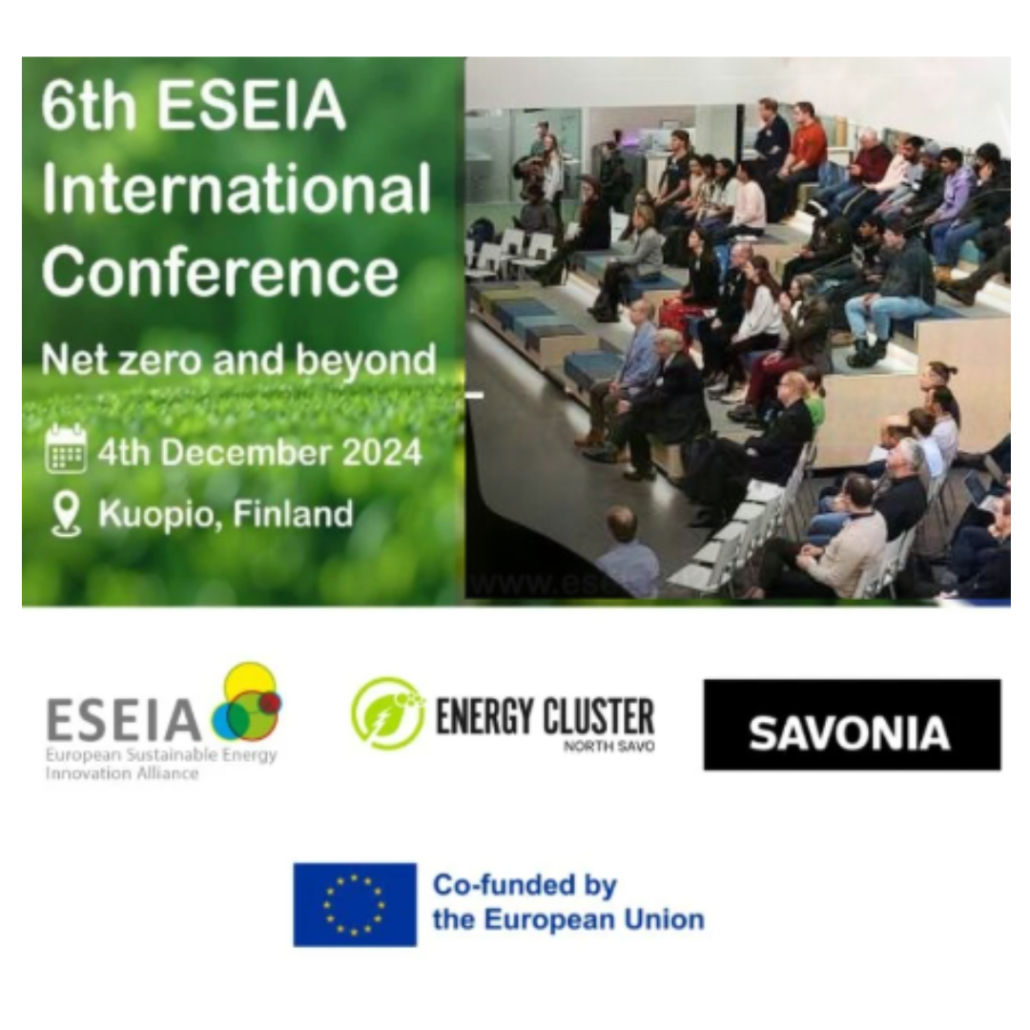
The 6th ESEIA International Conference, held on 4 December 2024 in Kuopio, Finland, was an impactful event that brought together experts from across Europe to discuss the urgent need for a sustainable, net-zero energy system. Organized by Savonia University of Applied Sciences in collaboration with the European Sustainable Energy Innovation Alliance (ESEIA), Energy Cluster North Savo, and the ÄLLITÄ project (Smart Heating Systems using Artificial Intelligence), the conference addressed key challenges and potential solutions for achieving net-zero emissions and going beyond that goal.
The conference gathered 70 participants and featured 27 presentations in 10 parallel thematic sessions, exploring a wide range of topics related to net-zero and sustainable energy systems. These sessions addressed the bio and circular economy, smart net-zero communities, the role of 4G district heating in sustainable heating and cooling, energy communities, net-zero emission buildings, decarbonization of mobility, novel materials for energy production and storage, social acceptance of net-zero systems, decarbonization of energy-intensive industries, and the integration of renewables. Together, these thematic sessions brought specialists from the ESEIA network, universities, organizations, and companies, offering a comprehensive view of the challenges and innovative solutions for achieving net-zero emissions.
ESEIA Member Contributions
ESEIA members played a crucial role in the conference, sharing their expertise and chairing thematic sessions.
ESEIA Vice-President Markku Huhtinen, Savonia University of Applied Sciences chaired the session on sustainable heating and cooling, focusing on 4G district heating systems. Markku’s session covered how advanced district heating solutions, integrated with sustainable energy sources, can play a pivotal role in achieving net-zero targets. His insights showcased innovative heating and cooling technologies that support sustainable, energy-efficient communities.
Rupert J. Baumgartner, University of Graz, chaired the session on bio and circular economy in net-zero systems. Rupert emphasized the importance of circularity in achieving net-zero emissions and explored innovative bio-based solutions for sustainable energy systems. His session discussed how bio and circular economy principles can reduce waste, optimize resource usage, and contribute significantly to carbon reduction efforts.
Frans Coenen, University of Twente moderated the session on social acceptance of net-zero systems and technologies. Frans highlighted the critical role of societal engagement in the energy transition. His session explored the challenges and opportunities in securing public and stakeholder buy-in for net-zero technologies, recognizing that social acceptance is key to the successful implementation of sustainable energy solutions.
Mario Hirz, University of Graz shared his expertise on the decarbonization of mobility. In his session titled “Potential Contribution of Automated Vehicles for Decarbonization of the Mobility Sector,” Mario discussed how emerging technologies such as automated vehicles can significantly reduce emissions in the transportation sector. His presentation delved into how these technologies can complement existing sustainability efforts and help achieve the broader goal of net-zero mobility solutions.
Keynote Speakers
The conference also featured two influential keynote speakers who shared their cutting-edge research and insights:
Professor Olli Sippula from the University of Eastern Finland presented on advancing circular economy practices and carbon capture in biomass and waste-fired power plants. His talk emphasized the global importance of adopting net-zero thinking and presented his team’s latest research on ash-related issues, conducted in collaboration with Savonia University of Applied Sciences. Professor Sippula’s research is crucial in advancing emission reduction technologies in the biomass sector.
Guilhermo Magalhães, Development Manager at Andritz Oy, gave a talk on the company’s CircleToZero initiative in pulp mills. His presentation highlighted how Andritz Oy has worked to achieve near-zero emissions and waste in pulp production processes. He also discussed the economic and environmental benefits of these innovations, showcasing how sustainable technologies can lead to financial growth while advancing net-zero goals.
Conference Conclusions
The 6th ESEIA International Conference successfully provided a detailed overview of how Europe can achieve its net-zero target and move beyond it. The plenary session, chaired by conference leaders, emphasized the need for more decisive action to stay on track toward net-zero goals. The conclusion stressed that technological solutions alone are insufficient; a systemic change is urgently required to transform energy systems across Europe. This systemic change must involve all sectors of society, including industry, government, and citizens, to work collaboratively toward a sustainable future.
The 6th ESEIA International Conference was a valuable opportunity to strengthen collaborations, share knowledge, and continue advancing the conversation on sustainable energy solutions. The ESEIA community remains committed to facilitating the transition to a net-zero future through innovative research, education, and cross-sectoral partnerships.
Learn more: https://eseia2024.fi/
Contact: office@eseia.eu

