
Science Diplomacy in Focus: Key Takeaways from the ESEIA 14th Lecture
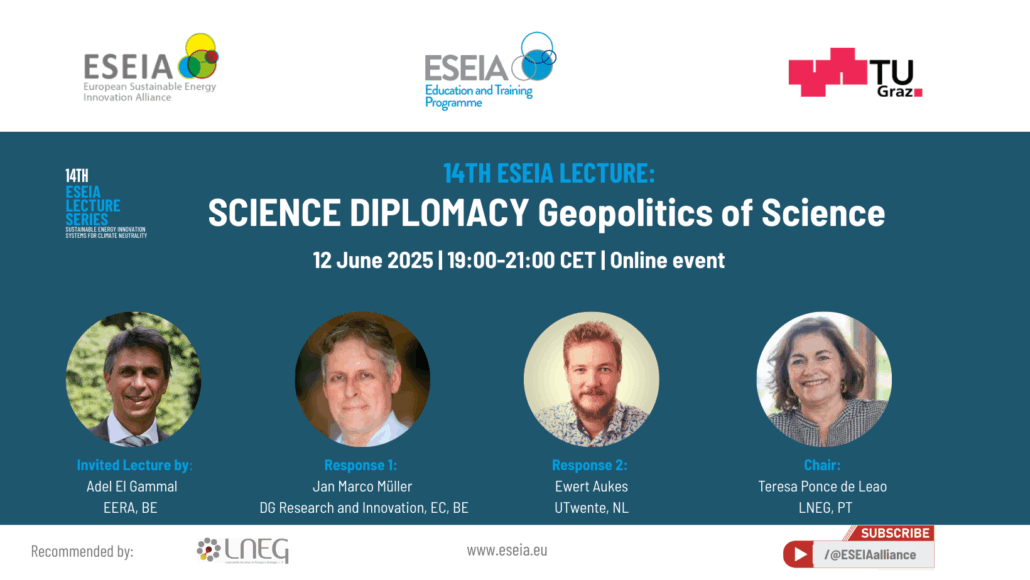
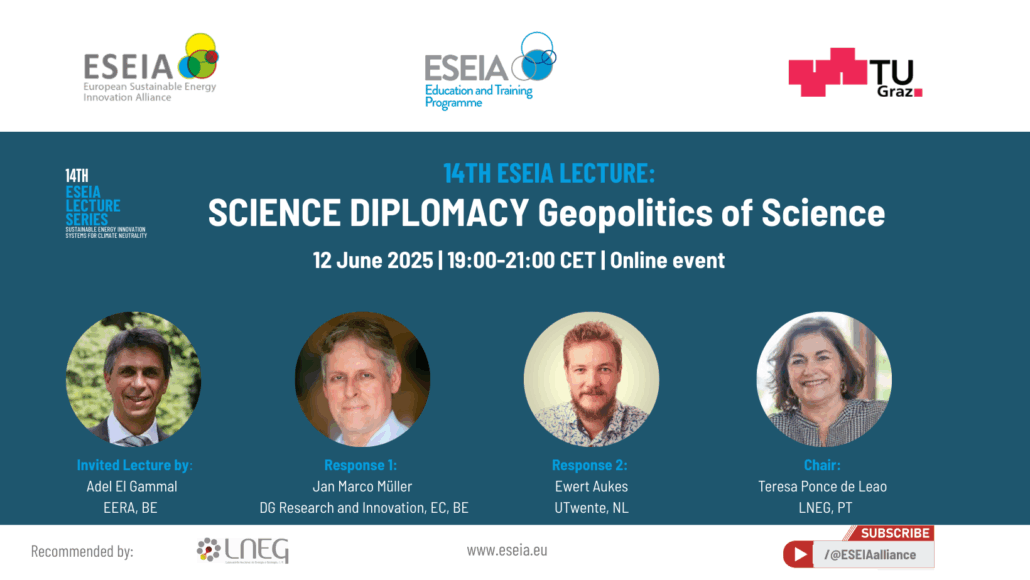
On 12 June 2025, the 14th edition of the ESEIA Lecture Series | Science Diplomacy. Geopolitics of Science gathered 21 participants from 9 countries and 13 organisations for a timely discussion on the evolving role of science diplomacy in today’s rapidly shifting geopolitical context. Held online, the lecture spotlighted how scientific collaboration can advance global cooperation, shape energy and climate policies, and support the implementation of the Clean Industrial Deal.
Keynote: The Rise of Science in Geopolitics
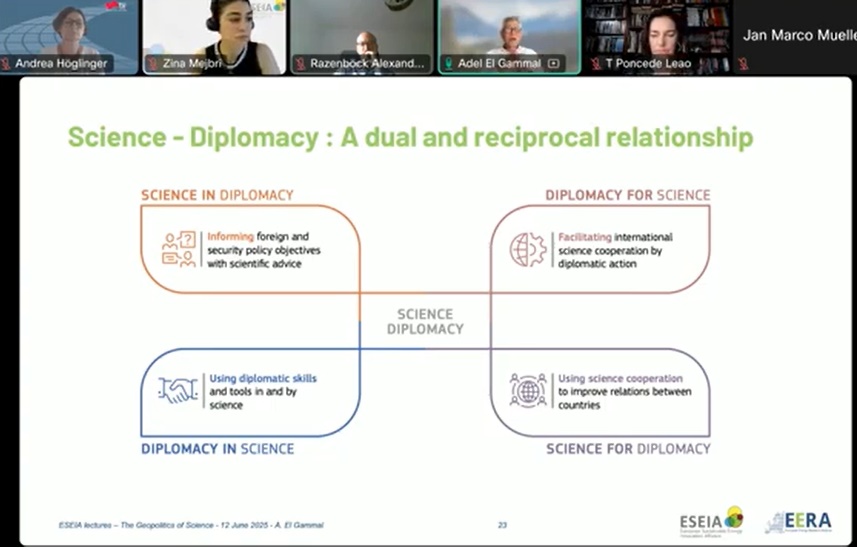
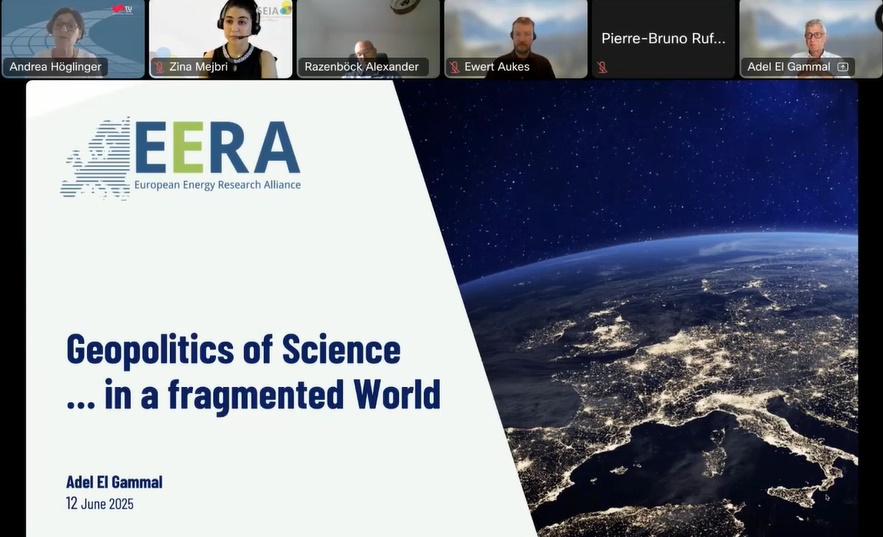
The session opened with a keynote by Adel El Gammal, Secretary General of the European Energy Research Alliance (EERA), BE, who offered a compelling overview of the shifting global order. In his presentation, El Gammal warned of an emerging “world disorder” marked by rising authoritarianism, fragmented alliances, and weakened multilateralism.
He highlighted how science is no longer neutral terrain—it is now both a tool and a battleground in global power dynamics. From clean tech races and AI dominance to climate diplomacy and global inequities, El Gammal argued that science must be strategically leveraged to uphold Europe’s autonomy and ethical values in international relations. He also underscored the urgent need for Europe to act as a unified force in the face of mounting geopolitical instability and environmental crises.
High-Level Respondents: Framing the Future of EU Science Diplomacy
Following the keynote, two expert respondents added valuable dimensions to the discussion:
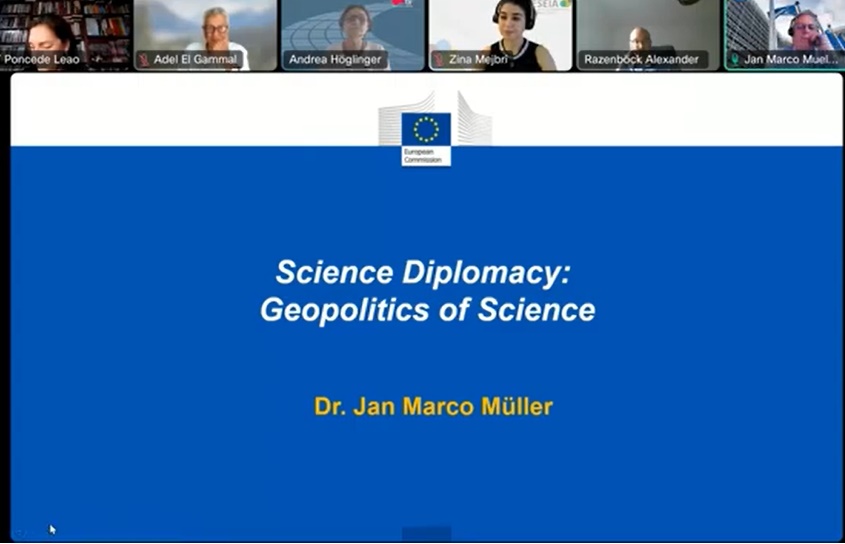
- Jan Marco Müller, Team Leader for Global Approach and Science Diplomacy at the European Commission’s DG Research and Innovation, BE, outlined the EU’s Framework for Science Diplomacy, co-created with over 130 experts. He presented key insights from the February 2024 report, stressing that science diplomacy is no longer about soft power alone—it’s about protecting strategic interests, enabling responsible technological leadership, and building resilience through collaboration.
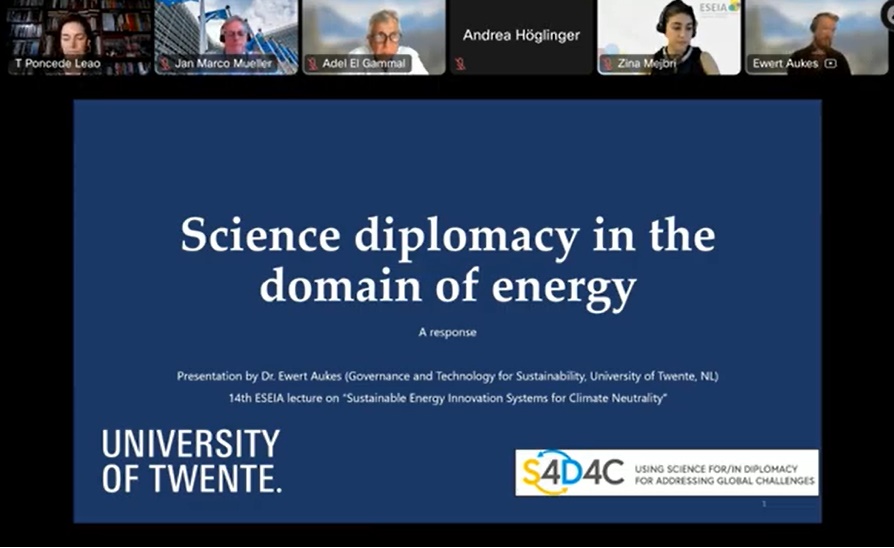
- Ewert Aukes, Assistant Professor at the University of Twente, NL, explored the intersection between energy policy and science diplomacy, calling for stronger interaction spaces, better strategic intelligence, and multi-level cooperation across research, governance, and diplomacy. He proposed a vision of science diplomacy as a dynamic practice involving shared decision-making in an increasingly complex energy landscape.
Reflections
The 14th ESEIA Lecture was chaired by Teresa Ponce de Leão, ESEIA Vice-President and President of LNEG, PT, and hosted by Andrea Höglinger from TU Graz, AT. Their guidance ensured a dynamic and inclusive conversation that resonated with both scientific and policy communities.
Participants praised the session for its depth, timely relevance, and forward-looking approach—emphasising that science diplomacy is a critical enabler of sustainable and equitable global partnerships.
What’s Next?
ESEIA will soon announce the details of its next lecture. Stay tuned and visit our dedicated page to explore the full ESEIA Lecture Series: ESEIA Lecture Series
Watch the full recording on our YouTube channel: @ESEIAAlliance https://www.youtube.com/watch?v=UP2cpz6rpJw
For more information, please contact the ESEIA Team at office@eseia.eu.