
Insights from the 16th ESEIA Lecture: Smart Production for Sustainable Materials
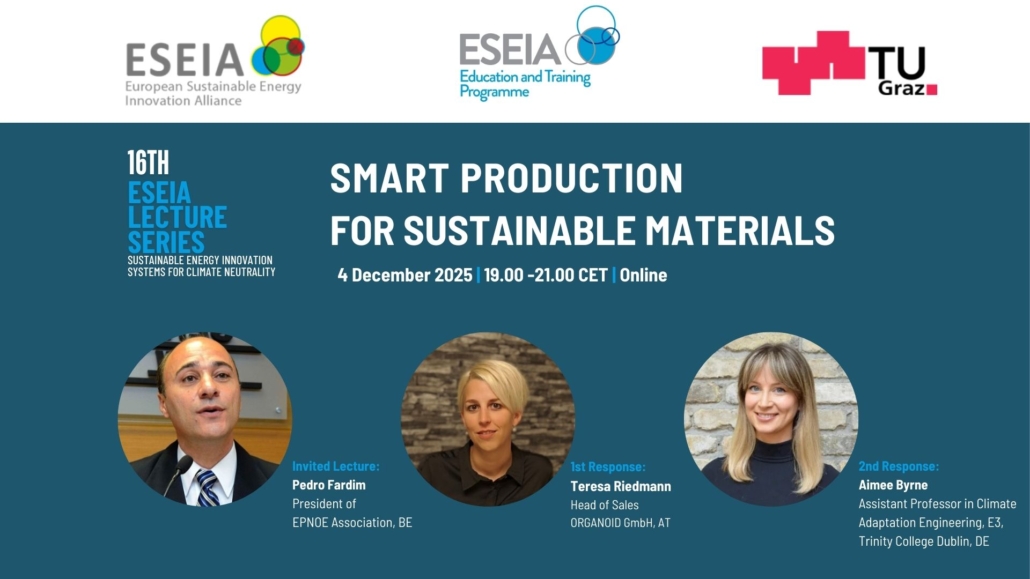
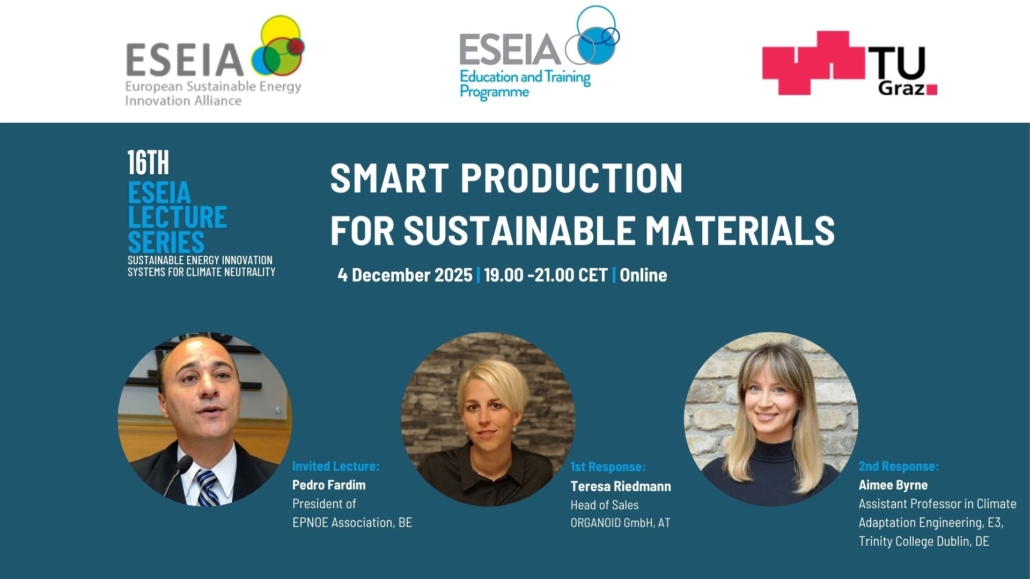
On 4 December 2025, the 16th ESEIA Lecture Series, held online, brought together 23 participants from 7 countries for an in-depth discussion on Smart Production for Sustainable Materials.
Hosted by Andrea Höglinger, Vice-Rector for Research at TU Graz, and chaired by Gregor Trimmel, TU Graz, the event opened with remarks from ESEIA Director Brigitte Hasewend, who reiterated the mission of the ESEIA Lecture Series as an “AGORA for open, scientifically informed dialogue” at a moment when Europe must accelerate efforts toward climate neutrality by 2050. The topic followed ESEIA’s recent collaboration with partners on an EU proposal inspired by the New European Bauhaus, focused on biofabricated materials.
Invited Lecture: Pedro Fardim, President of EPNOE and Professor at KU Leuven, BE
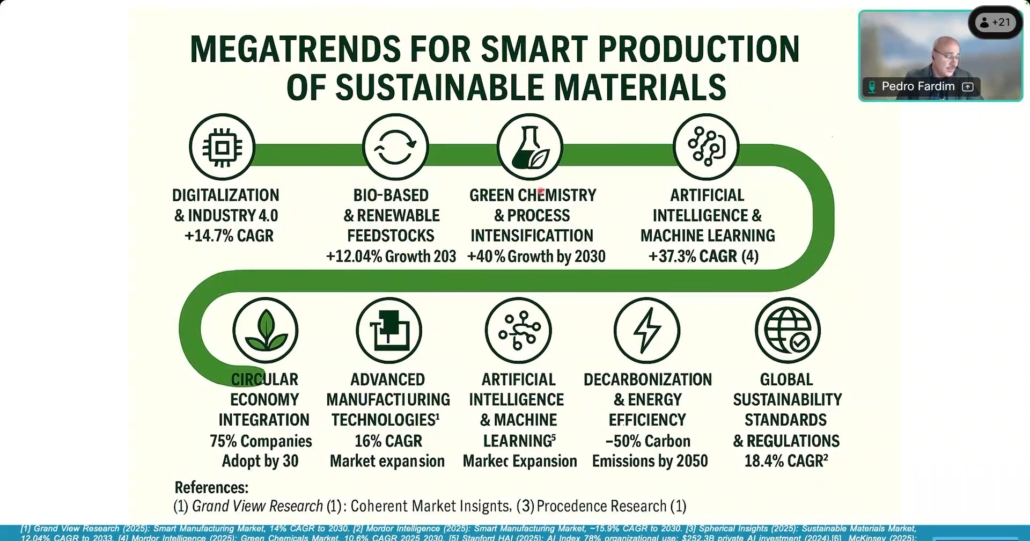
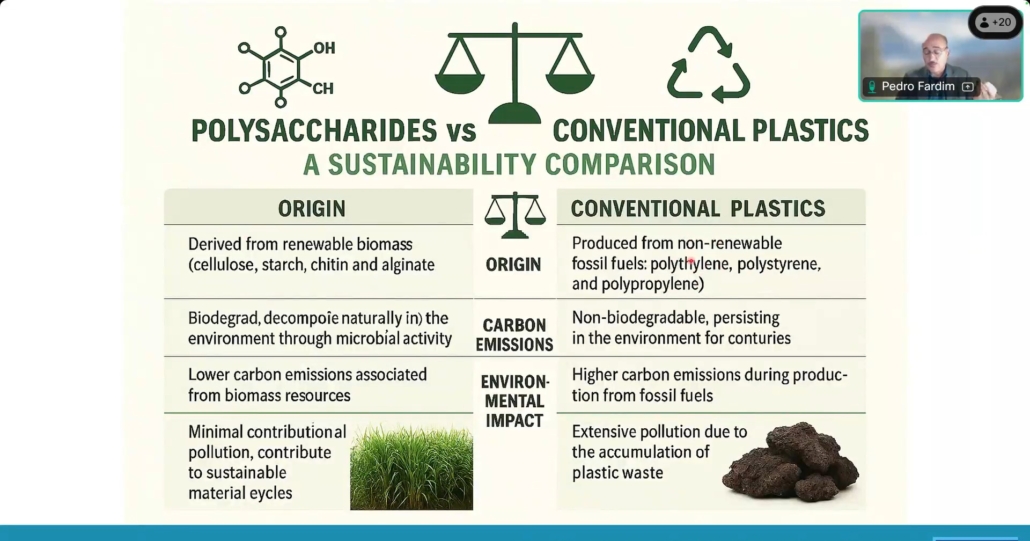
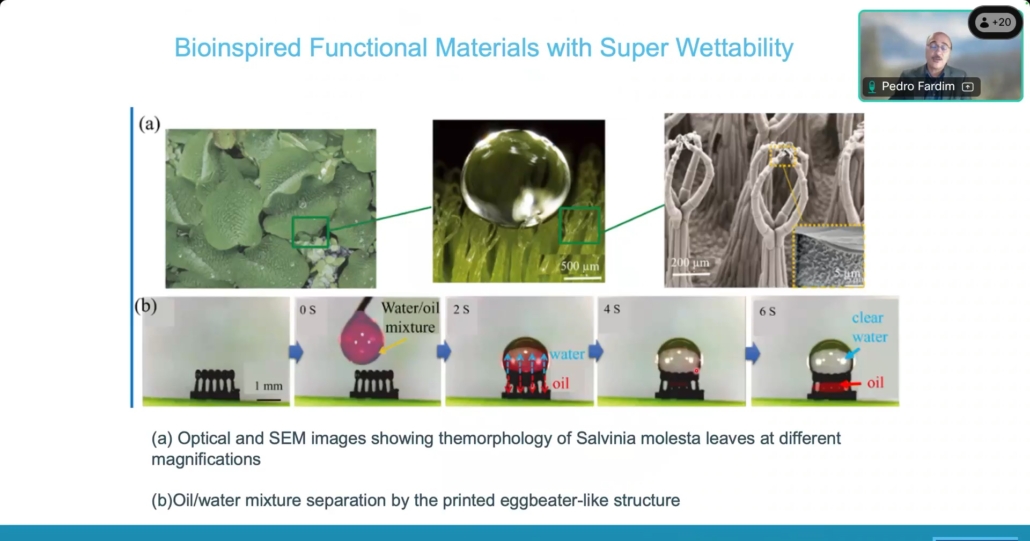
Pedro Fardim introduced the emerging field of biofabrication of materials, emphasising its connections with engineering, biomedical sciences, food and nutrition, energy harvesting and storage, as well as art and design. He described biofabrication as a way to “understand and mimic the bioassembly present in natural materials to create sustainable technologies for process and product design,” drawing inspiration from trees, plants, and microorganisms. His work centres on reproducing natural fabrication processes using water as a medium and biological polymers and inorganics as essential components.
Conclusion: His contribution underscored biofabrication’s potential to translate natural processes into sustainable material innovation. Watch the presentation.
Industry Response: Organoid GmbH, AT – Teresa Riedmann & Ulrich Huber
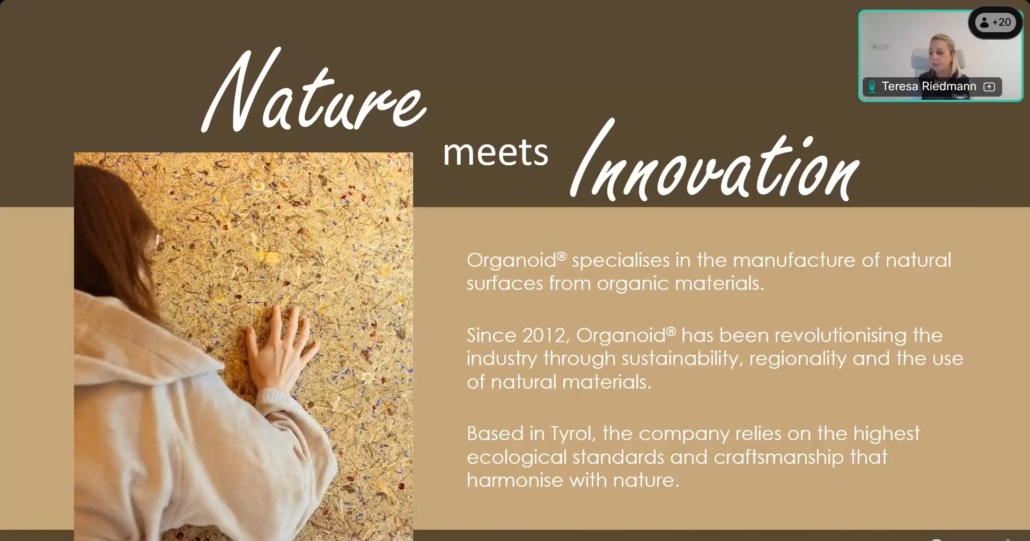
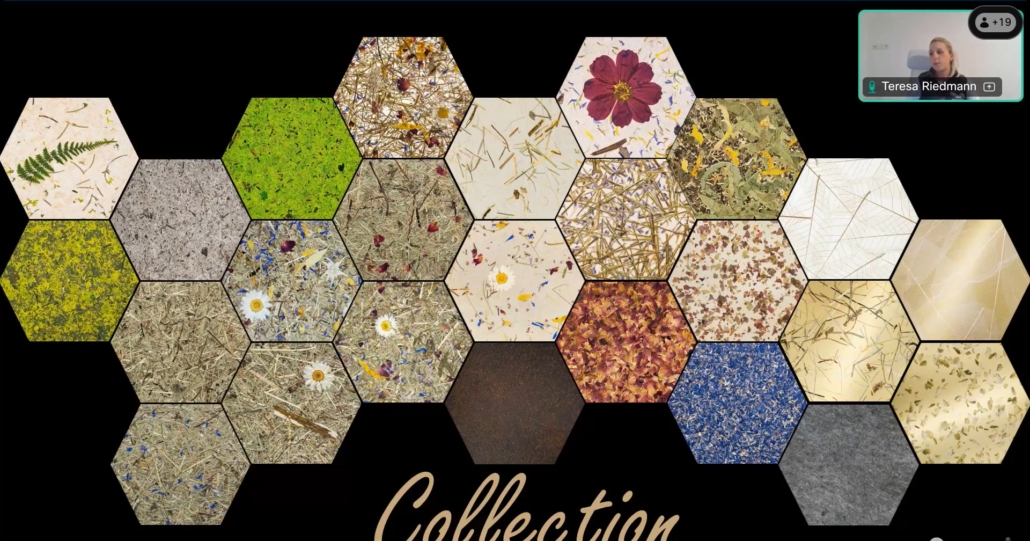
Representing Organoid GmbH, Teresa Riedmann and Ulrich Huber offered an industry perspective on biobased innovation and craftsmanship. Organoid, recipient of the Green Product Award 2025 for its CARPE DIEM product, presented its approach to producing natural surfaces from alpine hay, blossoms, herbs, natural fibres, moss, and other organic materials, all processed on breathable substrates.
Their presentation highlighted the company’s philosophy:
- “Our goal is to create a sustainable and livable future with innovative products made from natural materials.”
- “Our unique natural surfaces improve the indoor climate, regulate moisture and stimulate emotions.”
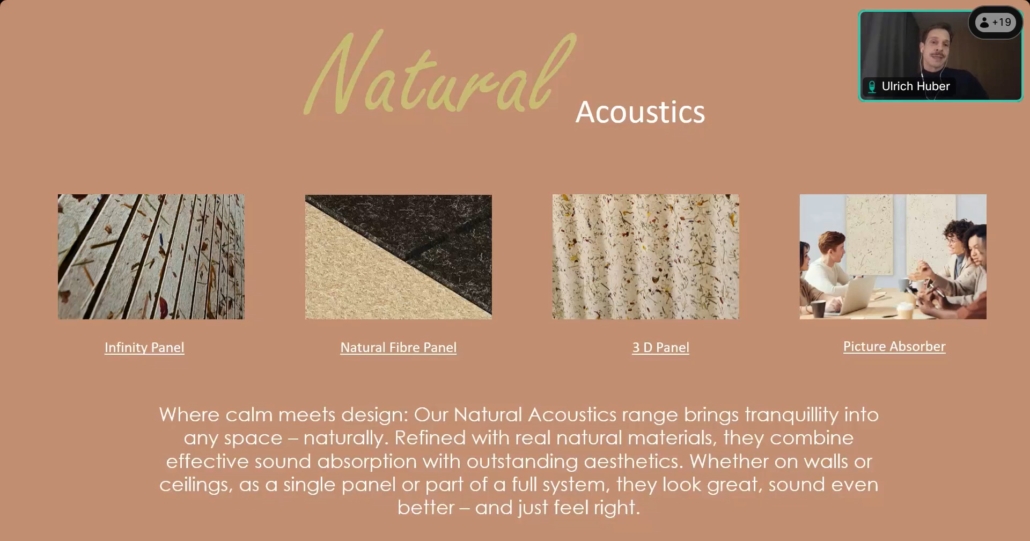
The speakers explored both the sensory qualities and functional performance of Organoid’s products, including the 2025 collection (featuring ROSY EVERLASTING, SUPERBLOOM, Tropical Heart and others) and the Natural Acoustics line. Ulrich Huber detailed solutions such as the Infinity Panel, Natural Fibre Panel, 3D Panel and Picture Absorber, illustrating how natural fibres can combine acoustic comfort with biophilic design.
Conclusion: Organoid’s response demonstrated how regional natural materials and smart production methods can deliver both aesthetic and functional benefits for interior environments. Watch the presentation.
Response 2: Aimee Byrne, Assistant Professor in Climate Adaptation Engineering, E3, Trinity College Dublin, IE
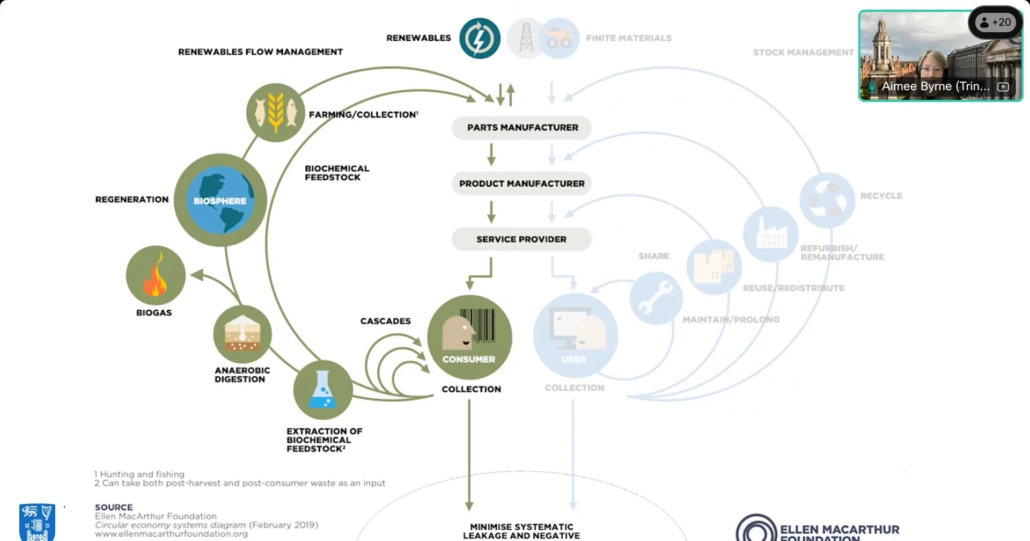
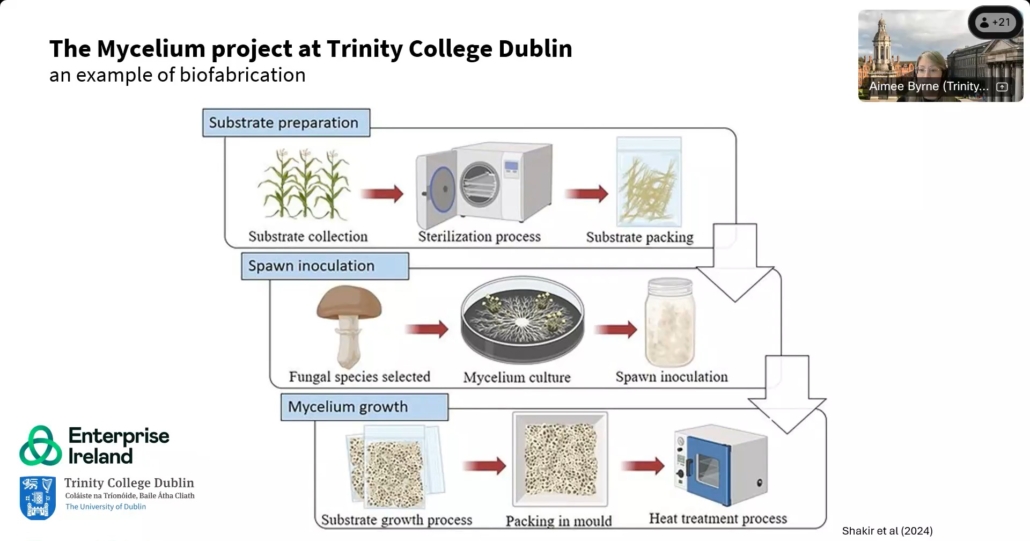
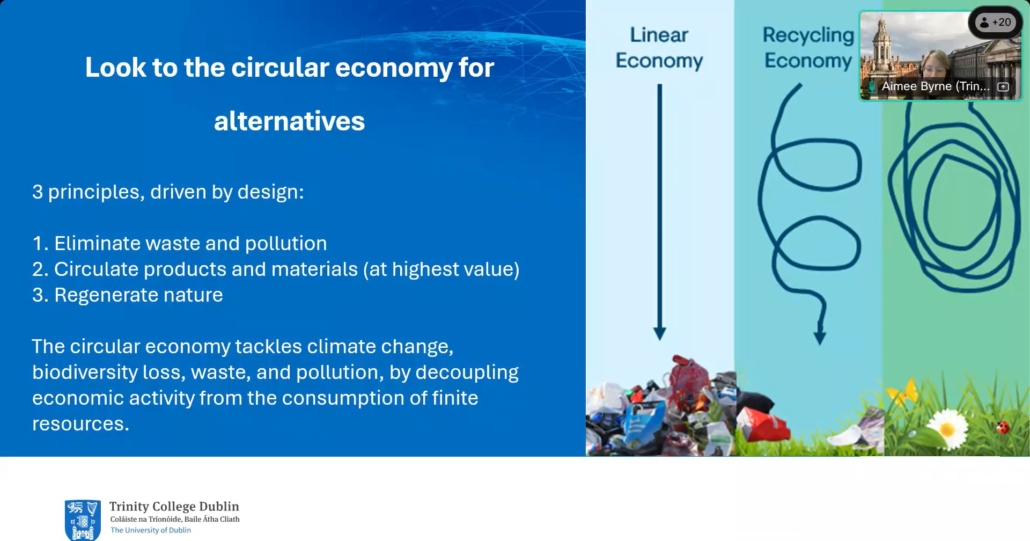
Aimee Byrne addressed the circular economy through the lens of the Triple Planetary Crisis, noting that resource extraction and processing generate 55% of global greenhouse gas emissions, 90% of biodiversity loss and water stress, and 40% of particulate pollution. She clarified the distinction between biobased and biofabricated materials and presented the Mycelium Project at Trinity College Dublin as a hands-on example of biofabrication.
Her overview included practical lessons on substrate preparation, inoculation, equipment sharing, air supply during colonisation, and the effects of pressing mycelium at different stages to improve strength, bonding, and load-bearing capacity.
Conclusion: Her intervention highlighted the potential of natural materials to support design circularity and reduce environmental impact in the built environment. Watch the presentation.
Panel Discussion and Q&A
The panel, chaired by Gregor Trimmel, explored key challenges to the uptake of biofabricated materials, including cultural perceptions, market readiness, and questions around durability, aesthetics, and user comfort. Participants engaged actively, raising questions on sensory design, circularity principles, and the scalability of biofabrication technologies.
Conclusion: The discussion made clear that advancing biofabrication requires both technological progress and increased societal awareness.
Closing Remarks
In her concluding statement, ESEIA Director Brigitte Hasewend thanked the speakers, TU Graz, and all participants, and announced the 17th ESEIA Lecture Series, scheduled for 23 April 2026 on Jobs for Green Transformation. Registration is now open.
The 16th ESEIA Lecture reaffirmed ESEIA’s role in fostering collaborative dialogue and supporting Europe’s transition to sustainable materials and production systems.
Watch the Lecture Again
Catch up on the 16th ESEIA Lecture and previous editions on the ESEIA YouTube channel: @ESEIAAlliance
More information: https://eseia.eu/education-and-training-eseia-lecture-series/
For further questions: office@eseia.eu